 English
 Deutsch
  Español
Traditional belt scales can work on stationary plants, but they often reach practical limits on mobile crushing, screening and shredding plants. As soon as the machine is moved, the discharge angle changes, or dust, rain, vibration or low material densities are involved, measurement becomes complex and prone to error.
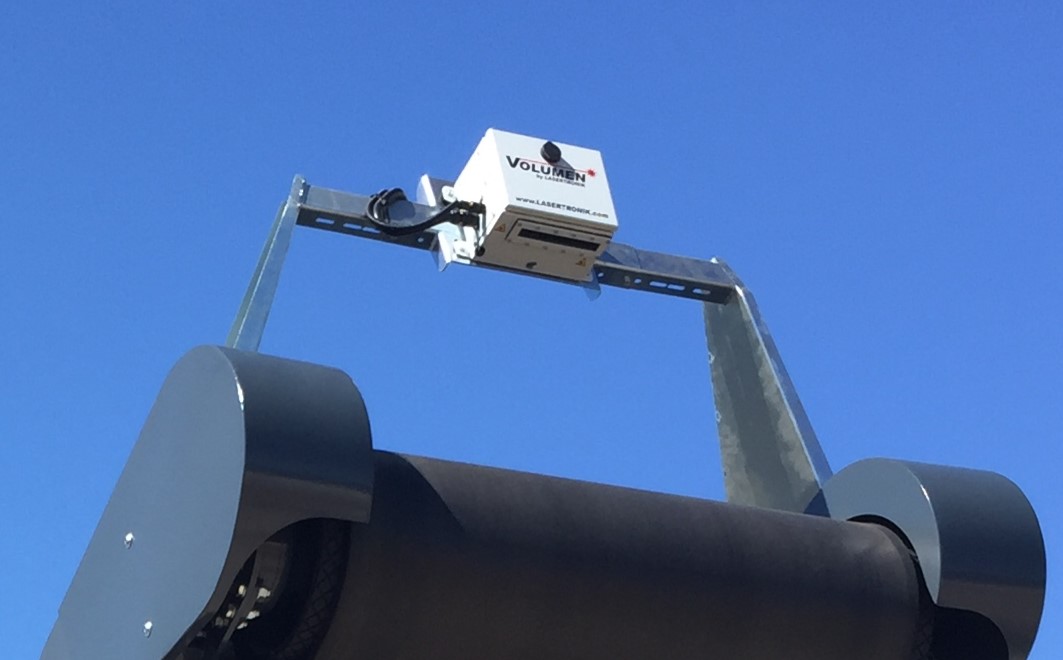
Volumen³ takes a different approach: the material is measured optically and without contact. This means the conveyor belt construction remains unchanged, the sensor operates wear-free and the system can be used flexibly on multiple machines.
A belt scale measures through mechanical load on the conveyor belt. Volumen³ measures the volume of the material on the belt without contact. This reduces installation effort, wear, readjustment and operating errors — especially on mobile plants.
The sensor technology measures without mechanical contact with the material. This prevents wear-related measurement errors at the sensor.
Volumen³ is particularly useful for mobile crushers, shredders and screening plants because relocation and discharge angles are taken into account in practical operation.
If several machines are prepared, the measuring unit can be used wherever it is currently needed.
There is no need to remove an entire roller section from the discharge conveyor. The machine remains structurally unchanged.
After switching on the system, taring is selected on the measuring system. The process runs automatically and takes about one minute.
Printouts per hour, per day or at freely selectable intervals provide clear proof for customers and internal accounting.
Many operators do not own just one machine, but several mobile machines. For example, machine 1 may be a mobile crusher and machine 2 a mobile shredder. Volumen³ can be prepared so that the measuring system can be used on both machines.
For this purpose, both machines are equipped with the required mounting and connection components. The actual evaluation and measuring unit is only plugged in where it is currently needed.
If the measuring system is needed on the shredder, the evaluation and measuring unit are moved, the connection cable is connected and the speed sensor is plugged in. In practice, this takes only a few minutes.
The measuring system is then switched on and automatic taring is started. After about one minute, the system is ready for measurement.
For operators of mobile crushing, screening and shredding plants, Volumen³ is particularly interesting when several machines are available, machines are moved regularly and reliable production data is required for customers, accounting and internal evaluation. Contactless measurement, simple installation, flexible use on different belt widths and clear documentation make Volumen³ a practical alternative to a traditional belt scale.
Comparison of Volumen³ with Belt Scales
The Key Difference
Direct Comparison
Criterion
Traditional Belt Scale
Volumen³
Measuring principle
Mechanical weight measurement via rollers, load cells or belt load.
Contactless optical volume measurement of the material flow on the conveyor belt.
Installation
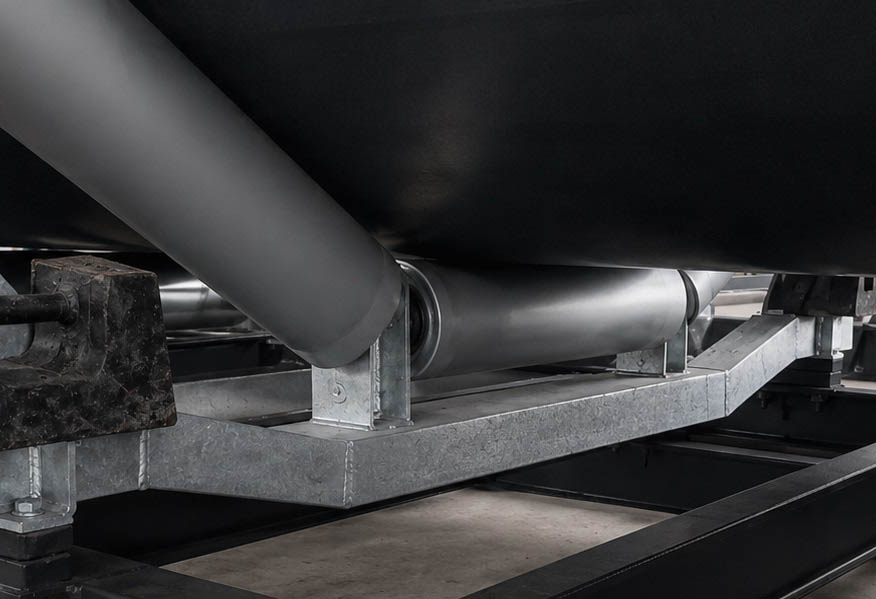
Often complex. Frequently, a roller section has to be removed from the discharge conveyor or modified.
Simple installation above the conveyor belt, usually near the drive drum or above a suitable roller station.
Intervention in the machine
Mechanical intervention in the belt construction is required.
The discharge conveyor construction remains unchanged. No roller station section has to be removed.
Mobile plants
Sensitive to relocation, inclination, movement or non-horizontal setup.
Developed for mobile crushing, screening and shredding plants. Angle changes after moving the machine do not require complex recalibration.
Readjustment
Often required after moving the machine. Time-consuming in practice.
No regular readjustment is required after installation. Only a short adjustment is needed when a new conveyor belt is fitted.
Wear
Mechanical components can wear or become contaminated.
Contactless sensor technology. No sensor wear caused by material contact.
Dust, rain, snow, light
Depending on the system, it can be susceptible to dirt, moisture or difficult ambient conditions.
Designed for harsh environments, high humidity, rain, snow, dust and strong light conditions.
Material density
Very light or varying material densities can cause measurement issues.
Also suitable for low material densities, for example when shredding wood or lightweight materials.
Belt widths
Often matched to one specific machine or belt width.
One measuring system can be used for different belt widths, up to 1600 mm.
Operation
Operation and calibration can require explanation.
Clear menu guidance, simple entry of customer, material and operator, plus automatic taring.
Documentation
Depends on the system and integration.
Daily counter, additional counters, job counter and printouts at adjustable intervals for customers and internal cost allocation.
Flexibility
Usually permanently tied to one machine.
One evaluation and measuring unit can be used on several prepared machines. Changeover takes only a few minutes.
The Main Advantages of Volumen³
Contactless and wear-free
Developed for mobile plants
One system for multiple machines
No complex belt modification
Fast automatic taring
Documentation for customers
One Measuring System for Multiple Machines
Preparation per machine
Changeover during operation
Why Volumen³ Is Especially Convincing on Mobile Plants
Problems with traditional belt scales
Advantages of Volumen³
Conclusion: Volumen³ does more than replace a belt scale — it simplifies the entire measuring process.
Comparison of Measuring Systems